



Government entities hold vast amounts of information that are worth a lot if it falls in the wrong hands. Therefore, with most of its information now digitalized, government networks are now the one of the most targeted in the world. Moreover, in recent years Government institutions are catching up with the rest of the industry and rolling out digital transformation initiations across complex hybrid cloud networks that include traditional and next-generation firewalls deployed on-premise and cloud security controls. But the complexity of these networks makes it difficult to see what’s going on, process changes, asses risk and ensure compliance with the multitude of regulations that government organizations are required to comply with.
AlgoSec’s unique, business-driven approach to security management enables government institutions to align security policy management with their business initiatives and processes, and make them more agile, more secure and more compliant.
With AlgoSec you can
- Automate the entire security policy management process – with zero-touch
- Manage the entire enterprise environment through a single pane of glass
- Proactively assess the risk of every change before it is implemented
- Automate firewall auditing and ensure continuous compliance with industry regulations, including NIST and FISMA
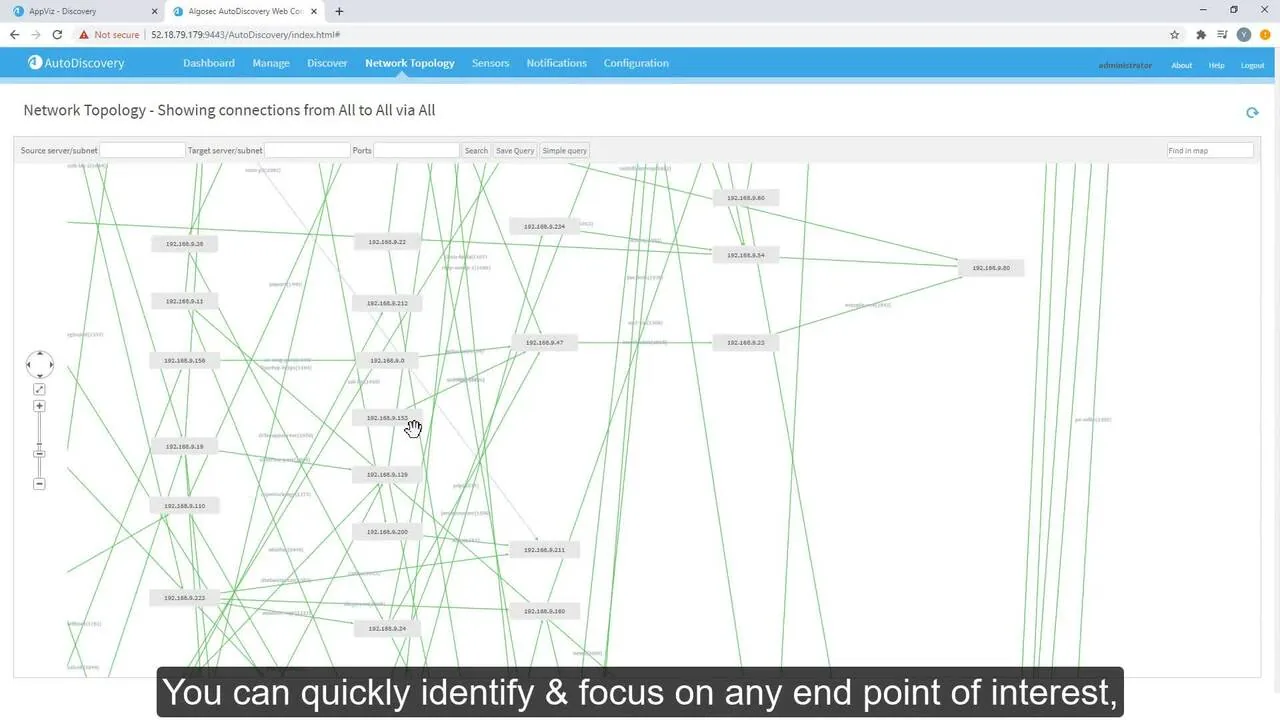
- Automatically discover, map and migrate application connectivity through easy-to-use workflows
- Built-in support for AWS, Microsoft Azure, Cisco ACI and VMware NSX
The business impact
- Get consistent, unified security management across any heterogeneous network environment
- Deploy applications faster by automating network security change management processes
- Avoid lack of communication between disparate teams (security, networking, business owners).
- Migrate application connectivity to the cloud quickly and easily
- Reduce the costs and efforts of firewall auditing and ensure continuous compliance
- Facilitate effective communication between security teams and application owners
FAQ
How can government agencies manage security policies across on-premises and cloud networks?

AlgoSec helps government organizations centrally manage network security policies across heterogeneous environments, including supported cloud and software-defined networking technologies. It provides visibility into policy changes and application connectivity and helps teams assess risk before implementing changes.
How does AlgoSec support government network security audits aligned with NIST and FISMA?
AlgoSec automates firewall auditing and provides compliance-related reporting to help government security teams assess network security policies against relevant requirements, including NIST and FISMA. Its risk assessment and policy management capabilities help teams identify issues, document reviews, and reduce the effort involved in audit preparation. Compliance still depends on the agency’s broader controls and processes.
How can government IT teams accelerate security changes without sacrificing oversight?
AlgoSec helps government teams automate network security policy management while assessing the risk of changes before they are implemented. By discovering and mapping application connectivity and reducing manual change effort, teams can support digital transformation and cloud migration while maintaining a more consistent security policy.
What is FireFlow?
FireFlow automates the security change policy process from planning through deployment to production. FireFlow integrates with your existing with IT Service Management (ITSM) solutions, such as ServiceNow, BMC Remedy and HP for quick, accurate changes.
How can I manage my firewall security policy?
FireFlow enables firewall security policy management through automated changes to firewall policies. FireFlow zero-touch change management integrates strategy, planning and design, implementing proactive risk analysis, validation and auditing to prevent errors and save time.
How can I manage my firewall's inbound & outbound rules?
Using FireFlow you can manage all inbound firewall rules to protect the network against incoming traffic, such as disallowed connections, malware, and denial-of-service (DoS) attacks and outbound firewall rules to protect against outgoing traffic, originating inside a network.
What are firewall change requests?
Firewall change requests are requests for a firewall configuration change which result in a change to the network security infrastructure. Firewall change requests must be monitored to prevent unintentional errors that violate compliance standards or increase vulnerabilities to the network.
What are firewall policy rules?
Firewall policy rules determine what traffic your firewall allows and what is blocked. Firewall rules examine the control information in individual packets, and either block or allow them according to the criteria that you define. Firewall rules control how the firewalls protect your network from malicious programs and unauthorized access.
What are the best practices for managing firewall policy rules?
When making changes to firewall rules, be aware of any potential security risks. Firewall rules should always be documented, with the creation and expiration date, the name of the person who added the rule and clarification of the rule’s purpose and what applications, services, devices, users and data it affects.